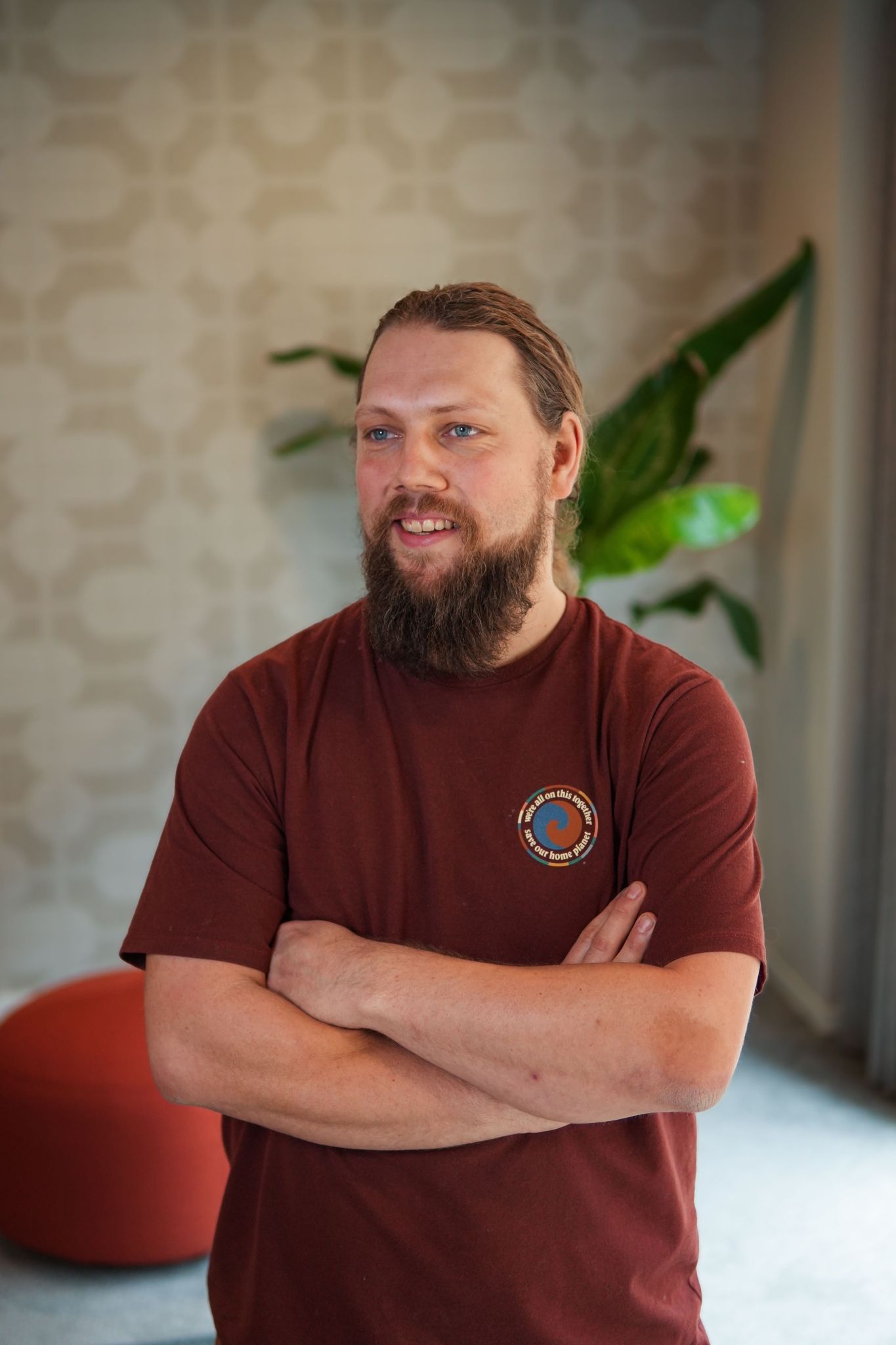
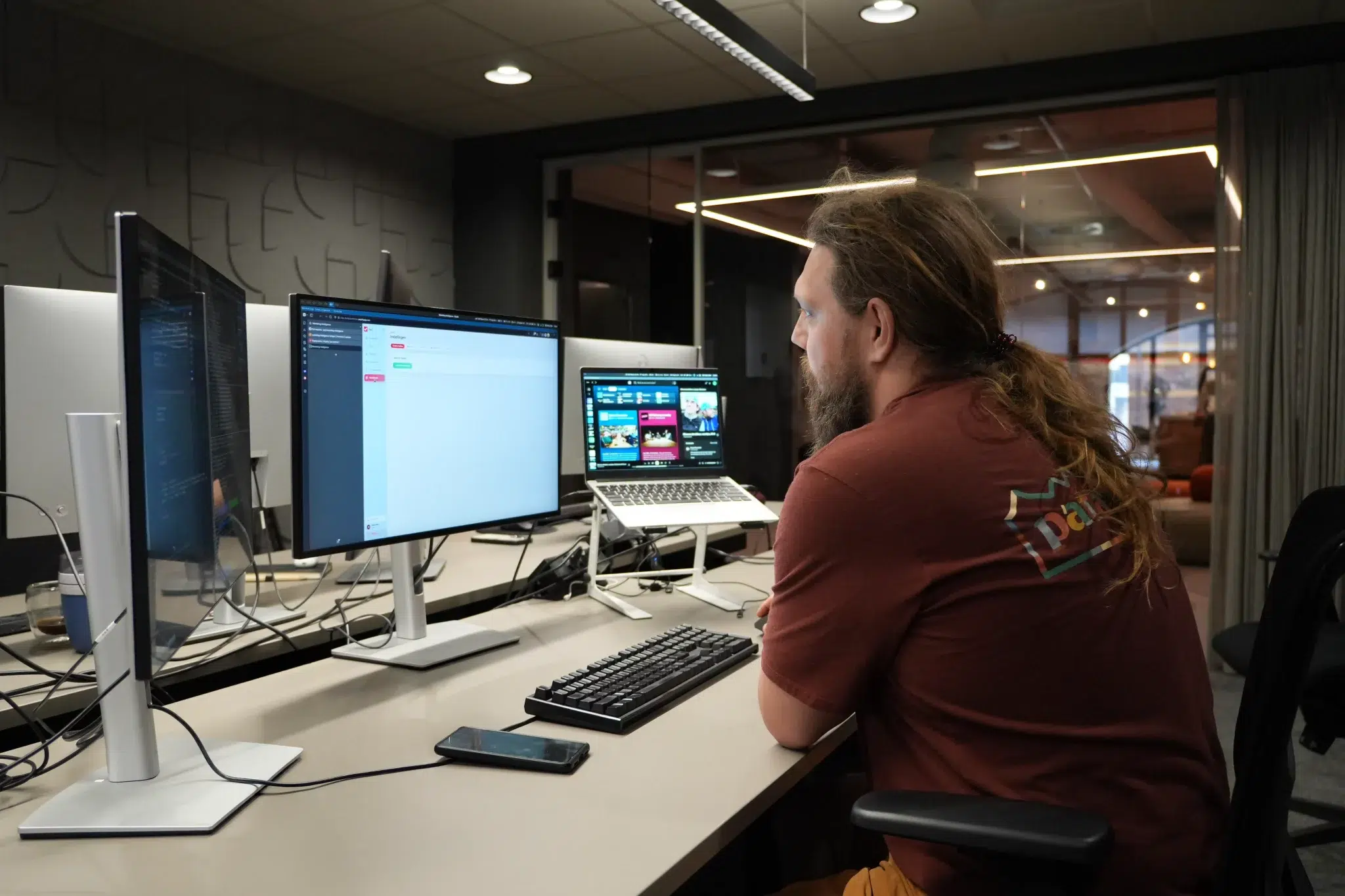
My name is Maikel Withagen, 35 years old, and I’ve been working as an AI/ML engineer since November 2017. In August 2025, I joined Payt as a Senior Machine Learning Engineer — the first in that role.
Previously, I worked on a project basis and then at startups. Quick decision-making and having a lot of autonomy suited me well. However, tight budgets and constant time pressure often lead to quick fixes. You rarely get the chance to do things properly, and that started to become frustrating.
At Payt, things work differently. There are no unnecessary layers, and if a message suffices, there’s no meeting. Everyone takes on their work independently, and decisions are made directly. What is built is done so because it benefits the customer — not just because the sprint is over.
The first few weeks were a great challenge. Each developer works independently on their own tickets — there is little consultation, and everyone knows what they are doing. As a new ML engineer without a ready-made task list, I had the freedom to find my own way. I had to get to know the application, figure out what ML functionality was already in place, what the future aspirations were, and most importantly: how to prioritise all of that. This freedom to organise things myself fits perfectly with how Payt operates.
My role has two aspects. I work on the product itself: expanding new features and existing functionality with AI. Additionally, it involves how the team engages with AI — in workflows, in how you tackle problems. The aim is not to replace people but to enable the team to work more efficiently. Payt wants to continue growing without becoming a large corporate entity — this requires working smarter with the same team. AI can play a role in this. There is certainly curiosity among colleagues.
You see it everywhere: companies trying to keep up with what AI has achieved in recent months. A new model every week, a new milestone every month. The challenge is not to keep up with that, but to determine what actually benefits your customer. That is where Payt’s focus lies — not embracing the latest technology just because it’s possible, but building what works.
At the same time, it’s clear that the product itself will also change. AI advancements are rapid, and customers expect more flexibility — not just a software package that does what it does, but a service that adapts to their needs. The shift from a pure software product towards SaaS is no longer a choice; it’s a direction that companies must take. This requires different choices in how you develop, how you serve your customers, and how you handle change. This is precisely the kind of challenge I want to contribute to in the coming period.